
Body stiffness has become a widespread problem for many adults. Spending long hours sitting down combined with less physical activity & factors like stress & poor hydration often leaves the body feeling tight and restricted. People commonly experience stiffness when they wake up or feel discomfort during basic movements like bending or walking up stairs. The positive aspect is that relieving stiffness does not necessarily mean doing hard exercise or following complicated programs. Regular gentle yoga stretches can help loosen tight muscles & improve how the body moves naturally. The following four simple yoga stretches work well for people dealing with stiffness & can be done every day. These stretches target the most common problem areas including the spine & hips along with the shoulders and hamstrings. Each movement is designed to be performed slowly & carefully so the body can relax and feel better without experiencing any strain or discomfort.
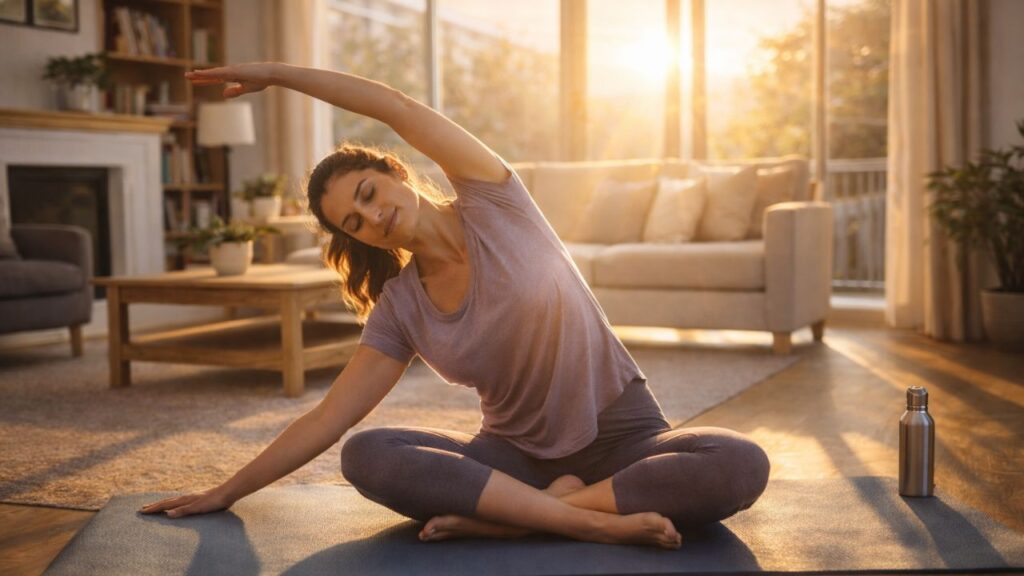
Why stiffness builds up in the body over time
Stiffness happens when muscles and connective tissues don’t move through their complete range. Sitting for many hours makes hip muscles shorter and creates tightness in the lower back. Looking down at screens puts strain on the neck and shoulders. Stress contributes to this problem too. When the nervous system remains tense the muscles stay partly contracted & this creates a constant tight sensation. Recent health studies show that regular gentle movement is one of the best ways to reduce stiffness as the body gets older. Yoga is effective because it combines movement with breathing. This tells the nervous system to relax while slowly stretching the tight areas. Over time this leads to better flexibility and joint comfort along with improved overall mobility.

How to practice these stretches safely
Pick a relaxing spot where you feel at ease and put on clothes that do not restrict your movement. Take your time with each movement and listen to your body instead of pushing too hard. You should feel a gentle pull in your muscles but stop immediately if you experience any sharp or stabbing sensations. Try to maintain calm and regular breathing through your nostrils throughout the session. Stay in each position for half a minute to a full minute and go through it one or two more times. Practicing these stretches daily will show clear improvements in your flexibility after several weeks.
Cat Cow Stretch for spinal stiffness
Begin in a tabletop position with your hands directly below your shoulders and knees below your hips. When you breathe in, let your stomach sink down while lifting your chest and gazing ahead. When you breathe out curve your spine upward while tucking your chin and pulling your stomach in. Continue moving between these positions for 8 to 12 breaths. This movement increases flexibility throughout your spine and decreases stiffness in your neck & upper back. It also promotes better breathing because your ribs can expand more easily. Most people notice quick relief after several repetitions since the spine naturally moves in various directions.
Standing Forward Fold for tight legs and back
Position your feet so they align with your hips. Bend your knees a little and lean forward from your hip area. Allow your head to drop naturally and place your hands wherever feels right on your thighs or shins or down to the ground. Hold this position while taking 6 to 10 deep breaths. This movement works on your hamstrings and the lower part of your back. These two spots frequently contribute to feeling tight throughout your entire body. The slight knee bend matters especially when your body feels stiff because it takes pressure off your muscles & lets them loosen up slowly. Bending forward like this also brings a sense of calm to your thoughts & helps your body let go of built-up tightness. For those just starting out: Use a chair or yoga blocks under your hands to get extra support and make the position more comfortable.
Seated Spinal Twist for tight hips and waist
Start by sitting on the floor & stretching your legs out in front of you. Bend your right knee and put that foot on the outside of your left thigh. Sit up straight and slowly turn your body to the right while placing one hand on the floor behind you for balance. Stay in this position for 5 to 8 breaths before repeating on the other side. This twisting movement helps your spine & hips move more freely and reduces the stiffness that comes from sitting for long periods. The twist also helps your digestive system work better and can reduce bloating that makes your stomach feel tight. Remember to twist gently & think about making your spine longer instead of trying to turn too far.
Child’s Pose for full body relaxation
Get down on your knees and lower your hips back so you are sitting on your heels. Touch your big toes together & let your knees spread apart a bit if that feels okay. Reach your arms out in front of you and place your forehead down on the floor or on a pillow. Hold this position for one to two minutes while breathing slowly. Child’s Pose works really well for tight muscles because it stretches your lower back and hips and shoulders all together. It also helps calm down your nervous system in a deep way. This pose helps a lot at the end of the day when your body feels the most stiff. If your knees hurt you can put a folded blanket between your thighs & calves or place one under your chest for extra support.
How long before stiffness improves
Some people feel better after the first session when they focus on their back and neck areas. If you have been dealing with stiffness for a long time you need to stick with a regular routine. When you do these four stretches every day for two to three weeks you will notice that your flexibility gets better and your muscles feel less sore. Daily activities become easier to handle as well. Your body responds much better when you give it gentle and regular attention instead of doing intense stretching sessions once in a while.
Simple habits that prevent stiffness from returning
Yoga becomes more effective when you combine it with minor everyday adjustments. If you spend most of your time sitting then get up and move around for several minutes each hour. Make sure you drink sufficient water so your muscles stay hydrated. Take regular walks to maintain joint mobility. Choose a sleeping position that provides proper spine support. These practices help you preserve the positive effects of your stretching routine.
Who should be cautious
People who have recent injuries or deal with joint problems or ongoing pain should talk to a doctor before trying any new exercise program. Make sure to use props and adjustments as needed and never force your body into uncomfortable positions. Feeling stiff does not mean your body is broken. It usually means your body needs some gentle movement and care. These four simple yoga stretches give you an easy way to connect with your body again & move better so you feel more comfortable during your regular activities without any stress or strain.