
Simple Yoga Moves to Calm Stress Fast Stress & anxiety can hit you out of nowhere. You might feel perfectly fine one second and then suddenly your shoulders get tight and your breathing turns shallow while your thoughts start spinning in circles. Managing stress over the long haul takes effort and time but some basic yoga positions can help settle your nervous system pretty quickly. These poses work well because they make you breathe slower & help tight muscles relax while telling your body it can stop being on high alert. You don’t need to be flexible or have any yoga experience to do these moves. You also don’t need to spend a lot of time on them. These four simple positions work great at home or during a break at work or in the evening when your brain won’t stop racing. The main thing is to move in a gentle way and keep your breathing slow & steady.
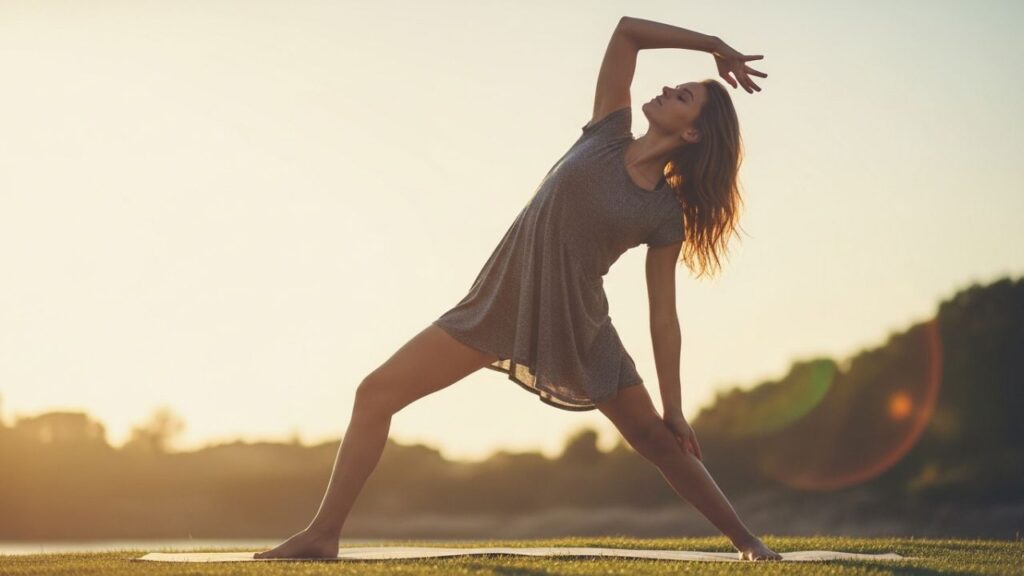
Why Gentle Yoga Brings Fast Stress Relief
Stress triggers the body’s natural survival response. Your heart rate increases, muscles tighten, and breathing becomes quick and shallow. Gentle yoga works in the opposite direction. Slow, mindful movements paired with steady breathing activate the body’s relaxation response. This shift helps calm racing thoughts, eases physical tension, and creates a sense of safety within the body.
These movements are especially effective when stress shows up physically, such as stiff shoulders, chest tightness, or restless energy.
Move 1: Child’s Pose (Balasana)
Child’s Pose is one of the most grounding and soothing yoga postures. It naturally encourages relaxation and inward focus. Begin by kneeling on the floor, bringing your big toes together and separating your knees slightly. Fold forward, resting your torso between your thighs. Allow your forehead to rest on the mat or a cushion. Your arms can extend forward or relax alongside your body.
Why it works: This gentle forward fold stretches the hips and lower back while calming the nervous system. The position supports slower breathing and signals the body to relax.
How long: Remain here for one to three minutes. Breathe through your nose and gently lengthen the exhale.
Move 2: Seated Neck and Shoulder Release
Many people carry stress silently in the neck and shoulders. Sit comfortably on the floor or in a chair with your spine upright. Gently tilt your right ear toward your right shoulder and hold the stretch. Keep both shoulders relaxed. Slowly return to center and repeat on the left side. You may also roll your shoulders gently forward and backward.
Why it works: Releasing neck and shoulder tension sends calming signals to the brain, helping the body move out of stress mode.
How long: Hold each side for 30 seconds to one minute. Move slowly and avoid forcing the stretch.
Move 3: Cat Cow Stretch (Marjaryasana and Bitilasana)
Come onto your hands and knees with your wrists under your shoulders and knees under your hips. Inhale as you gently drop your belly and lift your chest. Exhale as you round your spine and tuck your chin. Continue flowing smoothly between these movements.
Why it works: Coordinating movement with breath helps interrupt anxious thought patterns. The gentle spinal motion promotes relaxation and steady breathing.
How long: Complete eight to twelve slow rounds, allowing the breath to set the rhythm.
Move 4: Legs Up the Wall (Viparita Karani)
Sit beside a wall and gently swing your legs upward as you lie back. Your hips may rest close to the wall or slightly away for comfort. Relax your arms and close your eyes. A pillow under the hips can add extra support.
Why it works: This restorative pose encourages calm circulation and reduces physical fatigue. It is especially helpful when stress is combined with tiredness or restlessness.
How long: Stay for five to ten minutes, breathing naturally and bringing attention back to the breath if the mind wanders.
Simple Breathing to Enhance Relaxation
Breathing is what transforms these movements into effective stress-relief tools. Try inhaling through your nose for four counts and exhaling through your nose for six counts. Longer exhales help slow the heart rate and quiet the nervous system.
If counting feels uncomfortable, focus instead on smooth, relaxed exhalations.
Best Times to Practice These Yoga Moves
These poses work well during moments of sudden stress, before bedtime, or after long periods of sitting. They can also be practiced in the morning to prevent stress from building throughout the day. Even a short five to ten minute session can be effective.
Building a Daily Stress-Relief Habit
Regular practice matters more than how long you practice. Doing these gentle yoga movements daily trains your body to calm itself more quickly. Over time, stressful moments may feel easier to manage and recovery may become faster.
Yoga may not remove stress from life, but it changes how your body responds to it. These four simple movements offer a natural and practical way to reduce stress whenever it arises.
